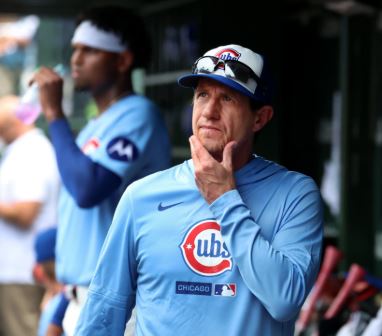
The Chicago Cubs appear to have quickly corrected what looked like a questionable decision involving David Peterson, restoring the left-hander to the starting rotation after briefly moving him toward a bullpen role.
Peterson’s return to the rotation comes at an important point in Chicago’s season. With the Cubs fighting to remain in postseason contention, dependable starting pitching has become increasingly valuable, and Peterson has emerged as one of the team’s most consistent arms since arriving from the New York Mets.
When Chicago acquired Peterson earlier in the season, the move was viewed as an important piece of business for a rotation that desperately needed stability. Peterson had experienced an uneven beginning to the 2026 campaign with the Mets, but his performance changed dramatically after joining the Cubs.
Over his most recent 35 innings for Chicago, Peterson had posted an impressive 2.06 ERA while generating ground balls at a rate above 53 percent. That combination of run prevention and contact management gave the Cubs exactly what they needed from a mid-rotation starter.
His consistency became even more valuable after Chicago strengthened its pitching staff at the Trade Deadline by adding Kevin Gausman and Clay Holmes. Those additions created a rotation logjam and forced manager Craig Counsell to make some difficult decisions about which pitchers would remain starters.
When Edward Cabrera returned from injury, Counsell initially indicated that Peterson would be moved to the bullpen. On paper, the decision was understandable because someone had to make room for Cabrera. However, Peterson’s performance made him a particularly surprising choice to remove from the rotation.
The Cubs have now apparently reconsidered.
Chicago announced its pitching plans for the upcoming series against the Seattle Mariners, with Peterson scheduled to start Saturday night. Matthew Boyd is slated to open the series Friday, Peterson will take the ball Saturday, and Shota Imanaga is scheduled to start Sunday’s finale.
The announcement provides a strong indication that Peterson has regained his place in the rotation, at least for the remainder of the regular season.
Peterson has earned another opportunity
The decision makes sense based on what Peterson has done since joining Chicago.
In six of his eight appearances for the Cubs, he has surrendered two runs or fewer. His ability to consistently keep opponents from producing big innings has made him a reliable option behind the club’s top starters.
That reliability is particularly important during the final stretch of the regular season. The Cubs need pitchers who can consistently give them a chance to win, and Peterson has demonstrated that ability.
His success also raises questions about how Chicago will ultimately organize its postseason rotation.
There is no guarantee Peterson will receive a playoff rotation spot. The Cubs have several pitchers competing for those opportunities, and the organization could ultimately prioritize pitchers with greater upside or postseason experience.
However, Peterson has made the decision much more difficult than it appeared when he was initially moved toward the bullpen.
Cabrera remains the biggest question
Edward Cabrera’s return has complicated the situation.
The talented right-hander was expected to play an important role in Chicago’s rotation, but injuries and inconsistency have prevented him from establishing himself as a dependable starter this season.
Cabrera is currently dealing with another blister issue that placed him on the injured list. Once he returns, the Cubs could use him in the bullpen rather than immediately putting him back into the rotation.
That approach would allow Chicago to keep Peterson in the starting group while gradually determining how Cabrera fits into the pitching staff.
The arrangement could also protect Cabrera from being immediately thrown into a heavy workload after another injury.
Long term, however, the Cubs still need Cabrera to become an effective starting pitcher. His talent remains obvious, and Chicago’s rotation could be significantly better if he eventually reaches his potential.
For this season, though, Peterson’s performance has given the Cubs a much safer option.
Trade acquisitions have changed the rotation
The Cubs’ pitching depth looks considerably different from what it did earlier in the year.
The additions of Gausman and Holmes gave Chicago more high-end talent, but they also created a complicated roster puzzle. Adding established pitchers is generally a good problem to have, but it means someone has to lose innings.
Peterson’s brief removal from the rotation demonstrated just how difficult that decision can become.
While Gausman and Holmes were brought in to strengthen the staff, Peterson had already proven that he could provide valuable innings. Moving him out of the rotation risked removing one of the club’s most dependable performers at a time when consistency matters most.
Counsell’s latest pitching plans suggest the Cubs have recognized that concern.
What this means for the Cubs
Keeping Peterson in the rotation gives Chicago another dependable left-handed starter and provides greater stability heading into September.
It also allows the Cubs to use their bullpen more strategically rather than forcing Peterson into a relief role simply because of roster numbers.
For now, the rotation appears to have a clearer structure, with Peterson preparing for his start against Seattle and Imanaga remaining an important part of the weekend plans. Javier Assad is also expected to continue serving as a bulk option out of the bullpen unless the Cubs decide to send him back to Triple-A Iowa.
The bigger question will come when the postseason arrives.
Chicago will have to determine which pitchers give the team its best chance to succeed in a short playoff series. Peterson’s recent performance could put him firmly in that conversation, especially if he continues to limit hard contact and prevent opposing offenses from creating early leads.
At the very least, the Cubs have avoided wasting a valuable stretch-run asset.
Peterson has gone from being viewed as the odd man out to once again taking a regular turn in the rotation. Given his recent results, that reversal may ultimately prove to be one of the more sensible pitching decisions Chicago makes during the final weeks of the season.
For a Cubs team chasing October, having a dependable starter like Peterson available every fifth or sixth day could prove far more valuable than initially recognized.
Leave a Reply