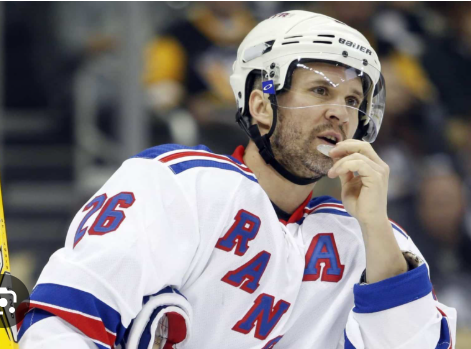
The 2025-26 season proved to be a difficult and disappointing one for Spencer Martin, whose brief stint with the New York Rangers failed to provide the stability the organization hoped for when they signed him midway through the season.
When the Rangers brought Martin into the organization in November, expectations were relatively modest. With superstar goaltender Igor Shesterkin firmly established as the team’s starter and veteran Jonathan Quick serving as the trusted backup, Martin was viewed primarily as organizational depth rather than a serious NHL contributor. His role was expected to revolve around providing insurance in case injuries occurred while also helping mentor younger goaltending prospects within the system.
At the time of his signing, Martin was playing overseas for CSKA Moscow in the KHL, where he had delivered respectable performances. In 14 games, he recorded a 2.69 goals-against average along with a .905 save percentage — numbers solid enough to convince the Rangers that he could still offer value as an experienced professional netminder. Although the KHL is widely considered less competitive than the NHL, Martin’s steady play overseas suggested he could step into an NHL role if necessary.
For New York, the move appeared sensible. Martin brought NHL experience, familiarity with the pressures of professional hockey, and veteran leadership that could benefit young prospects like Dylan Garand. The Rangers saw him as a dependable emergency option who could stabilize things if injuries disrupted the roster.
That opportunity arrived sooner than expected when injuries forced the Rangers to shuffle their goaltending depth chart. Martin was initially called up after Quick suffered an injury, with the organization opting for experience over immediately handing Garand a larger NHL opportunity. However, Martin’s first recall ended quickly, as Quick returned just days later and Martin was reassigned to the Hartford Wolf Pack without making a start for New York.
Martin eventually made his Rangers debut later in the season after another recall in January. His first NHL appearance with the club came in relief duty against the Boston Bruins before earning his first start days later against the Philadelphia Flyers. In that game, Martin showed flashes of competence and resilience, stopping 25 of 28 shots in what became one of the Rangers’ stronger overall performances during his short run.
Unfortunately, the momentum did not last. Martin made only a handful of appearances for New York, and the results quickly deteriorated. The Rangers lost each of his next three starts, and he was ultimately sent back to Hartford in early February, where he remained for the rest of the season.
Statistically, Martin’s NHL numbers painted a rough picture. Across six games with the Rangers, he posted a disappointing 4.13 goals-against average and an .864 save percentage — figures that ranked among the weakest on the roster. While he did average roughly 26 saves per game and faced a respectable workload, the overall consistency simply was not there. His struggles extended to the AHL as well, where he recorded a 3.51 goals-against average and an .873 save percentage in 22 games with Hartford.
Taken together, the season became a frustrating reminder of how difficult it can be for veteran depth goaltenders to regain momentum at the NHL level. Martin showed occasional flashes of reliability but was ultimately unable to establish himself as a dependable backup option for a playoff-caliber organization.
As a result, his overall performance earns a disappointing D+ grade for the season. The Rangers needed stability during critical stretches of the year, and Martin was unable to consistently provide it.
Looking ahead, however, the story may not be completely over for the veteran goalie. Martin remains under contract for another season and could still factor into the Rangers’ plans following Quick’s retirement. With the backup role behind Shesterkin now open, Martin enters the offseason as one of the few internal candidates with legitimate NHL experience.
His biggest competition will likely come from Garand, who made his NHL debut this season and continues to develop within the organization. The Rangers could also explore the free-agent market for another veteran netminder, which would further complicate Martin’s future.
Ultimately, Martin’s path appears relatively straightforward. If he impresses during training camp and preseason action, he could secure the backup role behind Shesterkin and spend the majority of next season at the NHL level. If not, he will likely return to Hartford, where he can continue serving as a veteran presence and mentor for younger prospects such as Callum Tung.
While his first season with the Rangers was undeniably rocky, Martin may still have one final opportunity to reshape the narrative surrounding his NHL career.
Leave a Reply