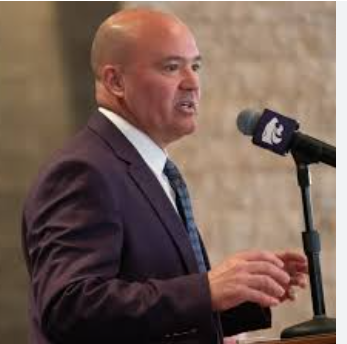
With the transfer portal officially closed, Kansas State men’s basketball can finally turn its attention toward the future with a completed roster for the 2026-27 season. After months of roster movement, coaching changes, and transfer activity across college basketball, the Wildcats now appear to have a clearer identity under first-year head coach Casey Alexander. The offseason work has sparked growing optimism around the program, with many believing Kansas State could emerge as one of the more intriguing teams in the Big 12 next season.
The transition into a new coaching era often comes with uncertainty, especially in today’s transfer portal-driven landscape where roster turnover has become the norm. Players frequently leave to follow former coaches or pursue opportunities elsewhere, forcing incoming staffs to rebuild quickly. Kansas State experienced plenty of that movement after Alexander took over, but the veteran coach has shown a deliberate plan in how he wants to shape the Wildcats moving forward.
Alexander arrives in Manhattan with a proven résumé after a successful run at Belmont, where he consistently built competitive teams and developed a winning culture. That experience appears to be influencing his approach at Kansas State, particularly in how aggressively and strategically he attacked the transfer portal. Rather than making random additions, the Wildcats focused on constructing a roster that addresses last season’s weaknesses while creating a tougher and deeper lineup capable of surviving the physical demands of Big 12 play.
One of the biggest changes from the previous roster is the renewed emphasis on size and frontcourt depth. Kansas State struggled at times last season due to a lack of interior presence, but Alexander made that issue a top priority during the offseason. The Wildcats added New Mexico transfer JT Rock, Xavier big man Pape N’Daiye, and former Murray State center Brock Vice, giving the team three legitimate center options heading into the new season. That marks a dramatic shift from last year’s smaller rotation, where Dorin Buca was often the lone true big man available off the bench.
By strengthening the frontcourt, Kansas State now appears much better equipped to handle the physical style of play throughout conference competition. The additions also provide more lineup flexibility, something the Wildcats lacked during stretches of the previous season. Even after losing talented players such as P.J. Haggerty and Taj Manning to other Power Four programs, the roster rebuild has still managed to generate excitement because of the balance Alexander has created across multiple positions.
The backcourt additions may be just as important. Colorado State transfer Brandon Rechsteiner and Bradley transfer Montana Wheeler have already become key names to watch as potential leaders at point guard. Both players come from successful mid-major programs, which aligns closely with Alexander’s own background and coaching philosophy. In the modern college basketball landscape, experienced mid-major transfers have increasingly proven they can step into major conferences and make an immediate impact, and Kansas State is hoping these additions follow that trend.
While optimism surrounding the Wildcats is growing, expectations remain measured entering the 2026-27 campaign. Kansas State has largely been absent from early preseason top-25 projections, which reflects the uncertainty surrounding a roster filled with new faces and a first-year coaching staff. At the same time, the Wildcats may benefit from the fact that much of the Big 12 is also undergoing major change. Programs like Cincinnati, West Virginia, and Arizona State are all navigating transitions of their own, creating a conference landscape that feels more open than usual outside of established contenders like Iowa State and BYU.
Because of that uncertainty, Kansas State could position itself for a faster rise than many expect if the roster develops chemistry early in the season. The Wildcats may not enter the year as championship favorites, but there is a realistic path toward finishing in the upper half of the conference standings and potentially competing for postseason opportunities.
Of course, talent on paper does not always guarantee success. Building continuity with so many new pieces will be one of the biggest challenges facing Alexander in his first season. There is also the larger question of long-term stability and whether Kansas State can sustain momentum beyond just one offseason cycle. Still, compared to where the program stood a year ago, the Wildcats appear far more prepared to compete physically and consistently in one of the toughest basketball conferences in the country.
On paper, this Kansas State roster looks deeper, stronger, and more balanced than last season’s group. If the new additions develop quickly and Alexander’s system translates smoothly to the Big 12, the Wildcats could become one of the conference’s biggest surprises during the 2026-27 season.
Leave a Reply