The New York Mets may have a difficult decision to make at catcher this offseason, and Luis Torrens’ remarkable second-half surge is making that decision increasingly complicated.
For much of the season, the Mets appeared committed to using Francisco Alvarez behind the plate while relying on Torrens as a complementary option. But the balance between the two catchers has shifted dramatically in recent weeks, particularly at the plate.
Torrens has transformed himself from a dependable veteran backup into one of the Mets’ hottest hitters during the second half. His production has become so impressive that New York could be forced to reconsider how it handles its catching position moving forward.
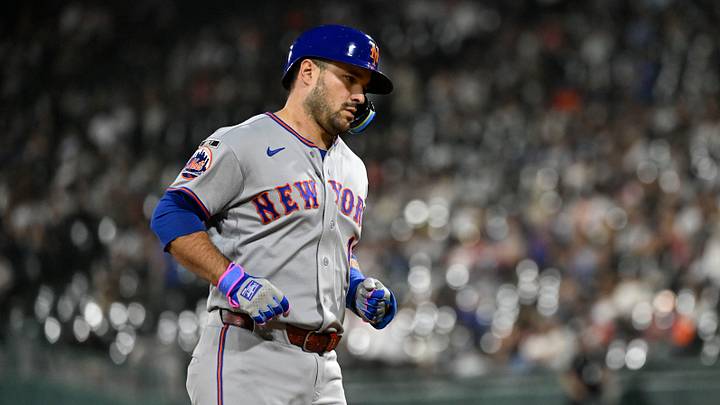
The situation was highlighted again Saturday against the Chicago White Sox. Torrens came off the bench and delivered a huge two-run home run in the ninth inning, adding another memorable moment to what has been an outstanding second half.
Entering the game, Torrens was hitting .243/.309/.414 for the season with eight home runs and 33 RBIs. Alvarez, despite receiving significantly more opportunities, was batting .236/.326/.405 with 13 home runs and 30 RBIs.
The overall numbers are relatively close, but the second-half production tells a much different story.
Torrens has been one of the most productive hitters on the Mets since the All-Star break. He has hit six home runs during the second half, trailing only Francisco Lindor and Luis Robert Jr., who have seven apiece.
Even more impressive is Torrens’ overall slash line during that stretch. He is hitting .333 with a .407 on-base percentage and a remarkable .750 slugging percentage.
Alvarez, meanwhile, has experienced a much more difficult second half. Although he has hit four home runs, he is batting only .195 with a .346 on-base percentage and a .379 slugging percentage.
His strikeout rate has also become a concern. Alvarez has struck out 39 times in 87 at-bats during the second half, while Torrens has struck out only six times in 48 at-bats and has drawn six walks.
That dramatic contrast has changed the conversation surrounding the Mets’ catching situation.
Torrens has also maintained an advantage defensively. He has established himself as the more reliable option behind the plate, while Alvarez continues to have problems with blocking pitches.
Alvarez currently leads the league in passed balls with nine. If that number holds, it would mark the third time he has led the league in that category.
Torrens, on the other hand, has produced a strong defensive rating. His nine Rtot rating leads the league, further strengthening the argument that he is currently the more complete catcher.
The Mets have attempted to work around Alvarez’s defensive limitations by frequently using him as the designated hitter. The organization clearly still believes in his offensive potential, but that strategy becomes more difficult to justify if Torrens is producing comparable or superior offensive numbers.
Interestingly, Alvarez has not shown a dramatic difference offensively based on where he plays. His OPS has been roughly similar whether he is catching or serving as the designated hitter, suggesting that simply moving him out from behind the plate has not unlocked a significantly better hitter.
That creates an intriguing roster dilemma for New York.
The Mets already have Jorge Polanco under contract for the designated hitter role next season, while the organization could also want Juan Soto to receive additional opportunities at DH. That could leave limited room for Alvarez if the team continues to view Torrens as its preferred catcher.
There is also the possibility of moving other players to create roster flexibility, but Alvarez’s situation could become the more significant question because of his trade value.
The idea of trading Alvarez has already surfaced during the season. The Mets reportedly received interest from clubs looking to acquire the young catcher, particularly teams that believe they could maximize his talent by giving him more consistent opportunities behind the plate.
While no deal materialized, the lack of a trade does not necessarily mean the market has disappeared.
If Alvarez remains available during the offseason, teams could view him as a high-upside reclamation candidate. He is still young enough to regain the form that once made him one of baseball’s most exciting catching prospects.
That potential is precisely what makes a trade so difficult.
The Mets could decide that they are selling too early on a player who has already demonstrated significant power and offensive upside. Alvarez has shown flashes of the ability that made him highly regarded, and another organization could believe that a different development plan and a larger role would allow him to return to his best.
At the same time, New York has to evaluate what Alvarez is providing right now rather than relying solely on what he might become.
Torrens’ emergence has made that evaluation even more important.
The Mets signed Torrens to a two-year extension earlier this year with an average annual value above $5 million. At the time, the move could have been interpreted simply as an attempt to secure dependable catching depth.
In hindsight, however, the contract could prove significant if the organization eventually decides to move Alvarez.
Torrens is now under team control, has demonstrated strong defensive ability and is producing offensively at a level that makes him far more than a traditional backup.
That gives the Mets an interesting option: retain Torrens as the primary catcher and use the resources gained from an Alvarez trade to address another weakness.
The risk, of course, would be moving on from Alvarez just as another organization unlocks his potential.
The Mets therefore face a genuine catch-22.
Keeping Alvarez means continuing to invest in a young player with considerable upside while accepting his defensive shortcomings and inconsistent offense. Trading him could provide valuable assets and simplify the roster, but it could also leave New York regretting the decision if Alvarez eventually becomes the star many expected him to be.
Torrens’ second-half explosion has made that decision much harder.
What once looked like a clear starter-and-backup arrangement now resembles a legitimate competition for playing time. Torrens has proven he can handle the defensive responsibilities while also delivering important offensive production.
For the Mets, the offseason could ultimately come down to one question: Is Francisco Alvarez’s long-term upside worth keeping him when Luis Torrens is currently providing comparable production with fewer defensive concerns?
There is no easy answer.
But with limited roster flexibility and several other players potentially competing for designated-hitter opportunities, catcher has emerged as one of the few positions where New York can make a significant offseason change.
If Torrens continues producing at anything close to his current pace, the possibility of an Alvarez trade could become much more realistic.
The Mets may have started the season wondering how to get the most out of both catchers. They could finish it deciding whether they need both of them at all.
Leave a Reply