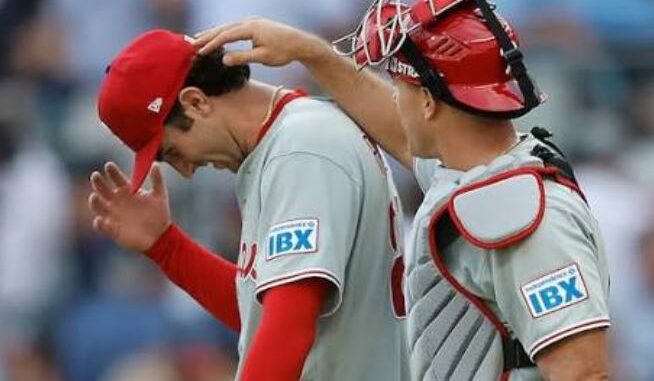
The Philadelphia Phillies refused to let their postseason campaign end without a fight, producing a dramatic 4-3 extra-inning victory over the Atlanta Braves on Wednesday night to force a decisive Game 3 in their National League Wild Card Series. Rookie pitcher Andrew Painter and third baseman Alec Bohm emerged as two of Philadelphia’s biggest heroes, while Bryce Harper transformed a costly defensive mistake into a crucial offensive contribution that helped keep the team’s October ambitions alive. Facing elimination after losing the series opener, the Phillies showed resilience when it mattered most, combining late power hitting, effective relief pitching and a clutch extra-inning home run to secure a victory that could reshape the direction of their postseason.
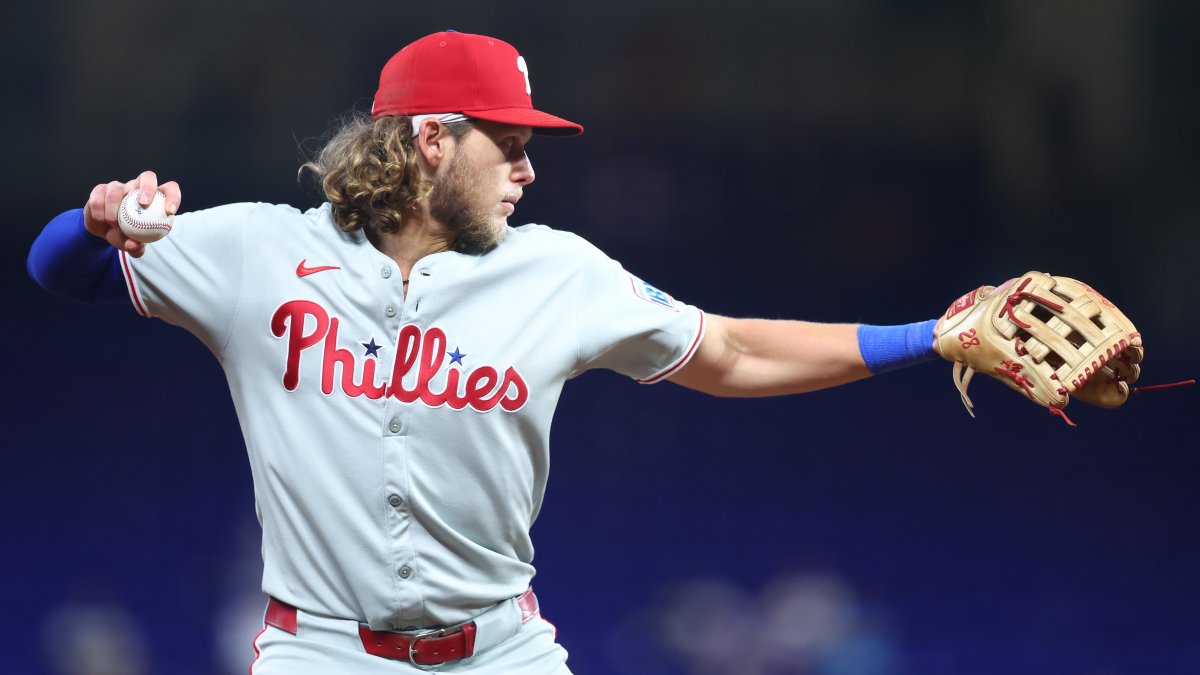
Bohm delivered the decisive blow in the 10th inning, launching a two-out solo home run to right field off Atlanta right-hander Didier Fuentes to give Philadelphia the lead. The 357-foot drive marked the third postseason home run of Bohm’s career and arrived at a particularly important moment for the 30-year-old infielder, who endured an inconsistent regular season and finished with a .249 batting average. With questions surrounding his future in Philadelphia as he approaches free agency, Bohm’s late-game heroics offered a timely reminder of his ability to deliver under pressure. Rather than allowing the uncertainty surrounding his next contract to distract him, Bohm focused on extending the Phillies’ season. He admitted afterward that he had been trying not to think about his future, emphasizing that his immediate priority was making sure the team’s campaign did not end prematurely.
Andrew Painter also played a vital role in the comeback, delivering three scoreless innings to stabilize a Philadelphia bullpen that had faced considerable pressure throughout the series. The rookie starter entered the game in a relief capacity and demonstrated composure well beyond what his experience might suggest, helping the Phillies survive Atlanta’s attempts to reclaim the advantage. His most important moment came in the 10th inning, when the Braves threatened to tie the game. Painter surrendered a single to Mauricio Dubón before striking out Austin Riley, but another soft single from Michael Harris II placed additional pressure on the young pitcher. With two runners aboard, Painter faced Dominic Smith in a decisive confrontation that ultimately ended the game. After an 0-2 fastball was initially called a ball, Painter and catcher J.T. Realmuto challenged the ruling through the Automated Ball-Strike System. The review confirmed that the pitch had clipped the strike zone, awarding Painter the strikeout and ending the contest. The moment was especially notable because it marked the first time a postseason game had ended following an automated ball-strike challenge.
Philadelphia’s comeback was also fueled by Harper, whose performance illustrated how quickly fortunes can change in October baseball. The Phillies had fallen behind after his misplay in right field helped Atlanta take control in the seventh inning. Drake Baldwin hit a double that glanced off Harper’s glove, allowing Sean Murphy to score and giving the Braves a 2-1 advantage. Matt Olson followed with a sacrifice fly that increased Atlanta’s lead to 3-1, leaving Philadelphia facing a difficult situation late in the game. Harper, who returned to regular outfield duties late in the season after not playing there since 2022, acknowledged that he believed Baldwin’s hit would be a routine pop-up. Instead, the ball continued traveling toward the warning track, and Harper was unable to make the catch. Although he was not charged with an error, the play immediately attracted attention from fans and placed additional pressure on the Phillies’ star.
Harper responded in the eighth inning by delivering one of the game’s defining moments. After Kyle Schwarber launched a 447-foot home run off Atlanta reliever Dylan Lee, Harper followed with a 418-foot solo shot to tie the game at 3-3. The back-to-back home runs completely changed the atmosphere, erasing Atlanta’s two-run advantage and restoring Philadelphia’s belief that another postseason comeback was possible. Harper’s response was particularly significant because Lee had earned the victory for the Braves in their 5-3 series-opening win on Tuesday. This time, Philadelphia’s power hitters punished the Atlanta reliever and prevented the Braves from carrying their lead into the final innings. Harper later explained that he had to move beyond the defensive mistake and concentrate on his next opportunity at the plate. His approach reflected the unforgiving nature of postseason baseball, where a player may have to recover from a difficult moment almost immediately to influence the outcome.
The victory also highlighted the contrasting performances of the starting pitchers. Atlanta’s Tyler Mahle delivered seven innings of one-run baseball, allowing six hits while keeping Philadelphia’s offense under control for most of the evening. His performance put the Braves in a strong position to win the game before the late home runs changed the result. Philadelphia starter Cristopher Sánchez also worked effectively for much of the contest, allowing three runs over 6 2/3 innings while throwing a career-high 116 pitches. Sánchez faced early trouble when Ronald Acuña Jr. drew a walk, stole second and third base, and scored on Olson’s single in the opening inning. Atlanta added another run later in the game, but Sánchez limited further damage and kept Philadelphia close enough for its offense to mount a comeback. His ability to work deep into the game was important, particularly with the Phillies needing to protect their bullpen during a high-pressure postseason matchup.
Atlanta appeared poised to take control after Baldwin’s seventh-inning double and Olson’s sacrifice fly, but Philadelphia’s late response ensured the game would not end in regulation. The extra-inning format also added another layer of tension because postseason games do not use the automatic runner at second base that is employed during the regular season. That meant the Phillies had to manufacture their decisive opportunity through conventional offensive execution. Bohm’s two-out home run ultimately provided the breakthrough, while Painter’s performance ensured the narrow lead survived. For interim manager Don Mattingly, the game offered encouraging evidence of the young pitcher’s development. Mattingly praised Painter’s progress throughout the season, noting that the rookie had continued to overcome obstacles since returning to action. The manager’s confidence in Painter was rewarded when the young right-hander handled the pressure of the 10th inning and delivered the final out.
The Phillies will now turn their attention to Thursday’s decisive Game 3, with their postseason hopes resting on a single contest. Philadelphia has enjoyed considerable success against Atlanta in recent playoff meetings, having defeated the Braves in the 1993 National League Championship Series and in the 2022 and 2023 National League Division Series. That history provides context for the rivalry, but it offers no guarantee of another victory. Atlanta will look to recover from the late collapse, while Philadelphia will attempt to carry the momentum from its dramatic comeback into the deciding game. Braves right-hander Grant Holmes, who finished the regular season with a 10-6 record and a 3.44 ERA, is expected to start or provide bulk relief. The Phillies are expected to counter with Aaron Nola, who recorded a 7-12 record and a 4.67 ERA during the regular season.
Philadelphia also received a potentially encouraging injury update involving Edmundo Sosa, who left the game after reaching first base on an infield single to begin the ninth inning. Sosa appeared to aggravate a leg issue and was replaced by pinch-runner Derek Hill. Mattingly indicated that the injury did not appear serious, although the team’s assessment and Sosa’s availability for Game 3 remain important considerations. With the series now reduced to a winner-take-all contest, every lineup decision, pitching change and defensive play could have a significant effect on the Phillies’ postseason future.
Ultimately, Philadelphia’s 4-3 victory was about much more than Bohm’s winning home run. It demonstrated the importance of responding to adversity, making timely adjustments and finding unexpected contributors when the pressure is highest. Harper recovered from a defensive mistake with a game-changing home run, Schwarber supplied the power that ignited the comeback, and Bohm delivered the decisive hit when the opportunity arrived. Painter then protected the advantage with three scoreless innings and a remarkable final strikeout that required an automated strike-zone review. The rookie and the veteran infielder may have occupied different roles, but their contributions were equally important in keeping the Phillies alive. Now, with their season hanging in the balance, Philadelphia must reproduce that determination in Game 3 if it hopes to continue its postseason run.
Leave a Reply