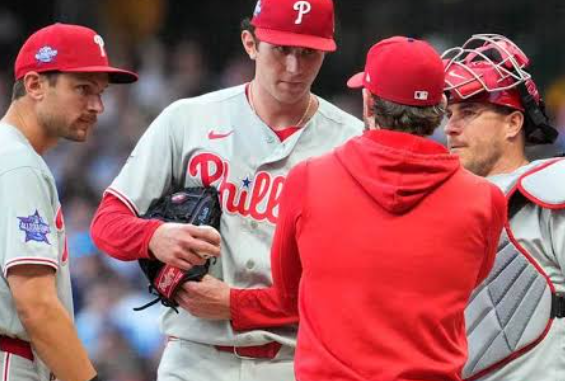
The Philadelphia Phillies appear to have found an internal solution to their rotation concerns following the demotion of top pitching prospect Andrew Painter, as right-hander Alan Rangel has stepped into the role and quickly earned organizational trust after a strong showing against the Washington Nationals on Monday, June 22.
Interim manager Don Mattingly confirmed to reporters, including Matt Gelb of The Athletic, that Rangel has effectively secured a spot in the pitching rotation moving forward. While Mattingly stopped short of guaranteeing a traditional starter’s role every time out, he emphasized that the organization has now settled on Rangel as the primary option for that rotation slot, with flexibility still possible in how he is deployed depending on matchups and game situations.
“We’ve kind of made a commitment to that spot,” Mattingly explained, noting that the Phillies may continue to mix in openers or adjust usage, but Rangel remains the preferred choice moving forward.
Rangel’s latest performance reinforced that decision. He delivered five innings of one-run baseball in a 4-1 loss to Washington, marking his most convincing outing since joining the big-league club this season. He previously appeared briefly in April, when he pitched three innings in relief against the Chicago Cubs, but his recent start showcased a more complete version of his abilities.
The 28-year-old right-hander joined Philadelphia on a minor league deal in 2024 and has steadily worked his way into consideration for a larger role. After posting solid numbers in Triple-A Lehigh Valley this season—where he recorded a sub-4.00 ERA over 70 innings—Rangel forced his way into the conversation as Painter struggled at the major league level.
Painter’s demotion came after a difficult stretch in which he surrendered 17 earned runs across three June starts, ballooning his ERA to over 7.00 and raising concerns about his readiness for consistent MLB action. In contrast, Rangel’s consistency and improved command in the minors made him the logical choice to take over the opportunity.
Mattingly highlighted that decision-making process, stating that Rangel earned the role because he was “the guy throwing the best” in the minors and was viewed internally as “the best guy long-term” for the organization in that spot.
At the major league level, Rangel has shown intriguing development within his pitch mix. He relies heavily on a changeup that has quickly become his most effective weapon, generating a majority of his strikeouts with the Phillies. Complemented by a low-90s fastball, curveball, and slider, his arsenal is built around deception and variation, particularly with his over-the-top delivery that enhances the movement on his off-speed pitches.

Rangel himself emphasized the importance of consistency and visual deception in his approach, explaining that his goal is to maintain the same release point while letting pitch movement create uncertainty for hitters.
As for Painter, his immediate future now shifts back to the minors, where he will need to regain form and consistency before earning another opportunity at the big-league level. However, with Philadelphia still managing rotation depth and potential injuries always a factor, another chance at the MLB level is not out of reach if he can correct his recent struggles.
For now, though, the Phillies appear to have settled on Rangel as their best option to stabilize the back end of the rotation as the season progresses.
Leave a Reply