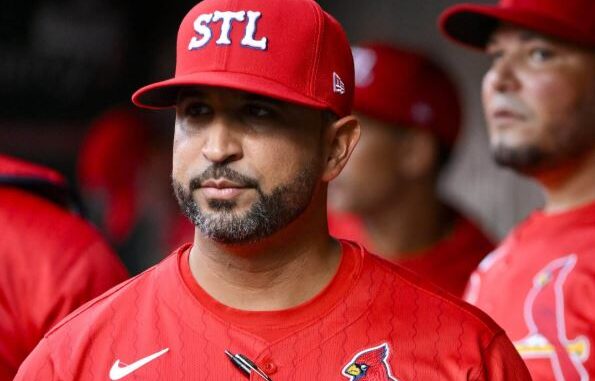
The St. Louis Cardinals have officially reached a milestone the franchise had gone nearly seven decades without experiencing. Following their loss to the Pittsburgh Pirates on Thursday, Sept. 24, the Cardinals secured back-to-back losing seasons for the first time in a full season since 1958-59, putting an unusual historical mark on what has otherwise been an encouraging rebuilding year.
The Cardinals entered 2026 coming off a 78-84 record in 2025, a season that missed the postseason and helped push the organization toward a more aggressive rebuilding direction. The 2026 campaign initially offered a much different feeling. Despite moving several established players, St. Louis showed competitiveness and received meaningful contributions from younger players, including Alec Burleson, J.J. Wetherholt and Jordan Walker. The team’s development at the major-league level gave the organization reasons to believe the rebuild could move forward without completely bottoming out.
A rare piece of Cardinals history
The significance of the latest loss goes beyond the current standings. Before 2026, the Cardinals had not experienced consecutive losing seasons since 1994 and 1995. However, those seasons were affected by the shortened 1994 campaign and the strike-related circumstances surrounding the following season. Looking specifically at full 162-game seasons, the last time St. Louis finished below .500 in consecutive years was 1958 and 1959.
That makes the 2026 season an unusual chapter in one of baseball’s most historically successful franchises. The Cardinals have traditionally avoided extended stretches of losing baseball, making the current rebuilding period particularly notable.
The historical comparison is striking because the players associated with the previous occurrence—such as Solly Hemus, Vinegar Bend Mizell and Gino Cimoli—played more than six decades ago. After Thursday’s result, that long-standing piece of franchise history finally came to an end.
The rebuild explains much of the situation
There is important context behind the record. St. Louis entered the season after moving several recognizable veterans as part of the organization’s restructuring. Sonny Gray, Nolan Arenado, Willson Contreras and Brendan Donovan were among the players traded during the previous offseason.
Those moves naturally reduced the amount of established major-league talent on the roster, while giving the Cardinals more opportunities to evaluate younger players and build around a different core. From that perspective, the team’s record does not tell the entire story of 2026.
In fact, the Cardinals spent portions of the season performing considerably better than many expected. At one point in June, they reached nine games over .500, creating legitimate optimism that the young roster could remain competitive deep into the season. The momentum eventually faded, however, as St. Louis struggled through July, August and September and ultimately slipped below .500.
There were still plenty of positive signs
Despite the unwanted historical record, the 2026 Cardinals were not simply a team that struggled from Opening Day through September. They produced several memorable wins and demonstrated an ability to fight back from difficult situations.
One of the clearest examples came on Opening Day, when St. Louis overcame a 7-1 deficit against the Tampa Bay Rays. The Rays would go on to win the American League East, making that early comeback one of the more impressive results on the Cardinals’ schedule.
St. Louis also proved capable of competing against some of the National League’s strongest clubs. The Cardinals won both of their series against the Los Angeles Dodgers, who entered the season as the defending World Series champions. They also won series against the Philadelphia Phillies, Atlanta Braves and New York Yankees, teams that ultimately secured postseason berths.
Those results suggest that the Cardinals’ season was more complicated than simply looking at the final record. The club showed flashes of competitiveness while simultaneously dealing with the realities of a roster transition.
September turned the season in the wrong direction
The biggest problem was that the Cardinals could not sustain their earlier success. After reaching nine games above .500 in June, the team gradually lost ground. July brought a significant downturn, August failed to produce a meaningful recovery, and September became particularly disappointing.
The loss to Pittsburgh was therefore more than another defeat. It officially removed the possibility of St. Louis finishing above .500 and ensured the franchise would enter the offseason with consecutive losing seasons on its record.
The Cardinals fell to 76-81 after the Sept. 22 loss to Pittsburgh, while the Pirates improved to 80-77. Pittsburgh’s Jared Jones dominated the matchup, allowing just one hit over seven innings and striking out nine. Nathan Church produced the Cardinals’ lone hit with a sixth-inning double.
The final series offers one more test
With the postseason out of reach, St. Louis still had one final opportunity to influence another team’s season. The Cardinals were scheduled to finish 2026 against the Milwaukee Brewers, who had already clinched the National League Central but were still competing for postseason positioning.
That gives the Cardinals a chance to play spoiler while simultaneously giving their younger players more valuable major-league experience. For an organization focused on rebuilding, those final games can provide another evaluation opportunity heading into the offseason.
Ultimately, the historical statistic is difficult to ignore: St. Louis has now experienced consecutive losing full seasons for the first time since 1958-59. But the larger story is the transition taking place inside the organization. The Cardinals sacrificed established talent to create opportunities for younger players, and while that process produced an unwanted franchise record, it also gave the club a clearer look at several pieces that could become important parts of its next competitive team.
In short: the 2026 Cardinals’ back-to-back losing seasons represent a rare low point in franchise history, but the season also produced evidence of progress from younger players and several wins against postseason-caliber opponents. The next stage of the rebuild will determine whether this unusual stretch becomes a brief transition period or the beginning of a longer restructuring process.
Leave a Reply