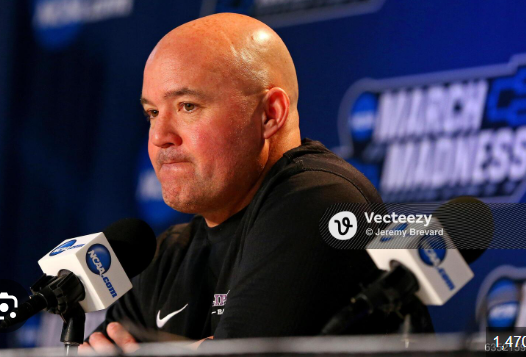
Kansas State men’s basketball is beginning a new chapter under head coach Casey Alexander, and there is growing confidence that the program may have found a steady long-term leader.

Taking over in Manhattan after successful runs at Belmont and Lipscomb, Alexander arrives with a reputation built on consistency, player development, and sustained winning at the mid-major level qualities Kansas State is now hoping translate to success in the Big 12.
Across more than a decade of coaching experience, Alexander has demonstrated an ability to keep his programs competitive year after year. Dating back to his early seasons at Lipscomb, his teams have consistently finished at or above .500 over the last 10 seasons, while also capturing multiple regular-season conference championships in both the Ohio Valley and Missouri Valley conferences. His résumé also includes an NCAA Tournament appearance with Lipscomb in 2018, a milestone that helped establish him as one of the most respected coaches outside the power conferences.
What stands out most about Alexander’s arrival at Kansas State is how quickly he has begun shaping the roster in his image. Recruiting has been an early strength, with the Wildcats already securing commitments from highly regarded high school prospects Devin Hutcherson and Jaylen Alexander. Both players arrive with strong accolades, including state-level honors and all-state recognition, and their willingness to follow Alexander signals the strength of his relationships and his ability to build trust with young talent.
Beyond high school recruiting, Alexander has also been active in the transfer portal, assembling a roster that blends experience with proven production. Kansas State has added several players from successful mid-major programs, including Brock Vice from Murray State, JT Rock from New Mexico, and Brandon Rechsteiner from Colorado State. Each brings familiarity with competitive systems and has already shown the ability to contribute at a high level.
At the same time, the program has seen outgoing movement toward similar mid-major destinations, including former Wildcat David Castillo’s commitment to Santa Clara. Rather than signaling instability, it reflects Alexander’s clear understanding of roster fit and the broader college basketball ecosystem, where movement between programs at similar levels is increasingly common.
Underlying Alexander’s approach is a clear philosophy: build continuity, avoid constant roster overhauls, and prioritize players who fit the system both culturally and competitively. That mindset aligns closely with what Kansas State experienced during its recent successful stretches, and it suggests an effort to recreate that stability rather than rely solely on short-term fixes.
While expectations will ultimately be measured on Big 12 performance, early indicators point toward a program being built with structure and intention. If Alexander’s track record of development and consistent winning carries over, Kansas State could be positioned not just for a competitive season, but for sustained relevance in one of college basketball’s toughest conferences.
Leave a Reply