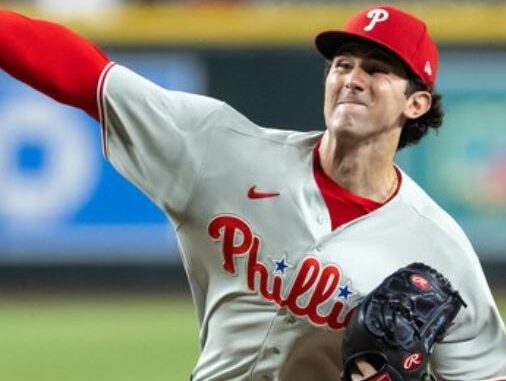
Andrew Painter appears to have turned a major corner at exactly the right time for the Philadelphia Phillies. The highly regarded young right-hander delivered perhaps his most convincing performance of the season Wednesday night in Arizona, tossing seven scoreless innings against the Diamondbacks despite the Phillies ultimately suffering a narrow 1-0 defeat.
Painter allowed only two hits, struck out six and issued no walks over 93 pitches, with 68 of those pitches finding the strike zone. After surrendering a leadoff single, he largely kept Arizona’s hitters under control. The Diamondbacks did not record another hit until the seventh inning, when Geraldo Perdomo singled with one out before Painter responded by striking out Tim Tawa to escape the inning.
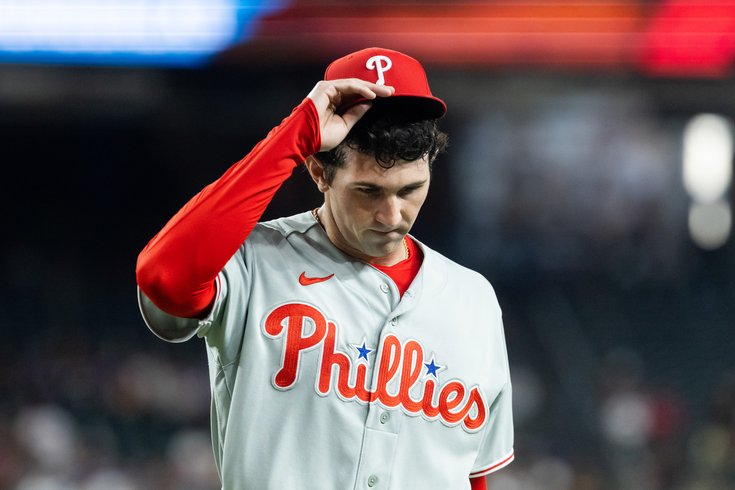
The performance was particularly encouraging because Painter showed the combination of velocity, command and breaking-ball movement that made him one of baseball’s most exciting pitching prospects. His fastball reached 98.7 mph, while his secondary pitches repeatedly gave hitters trouble. His breaking stuff moved sharply enough to jam right-handed batters and sweep away from left-handed hitters, making it difficult for Arizona to generate consistent contact.
Unfortunately for Painter, the Phillies’ offense could not provide enough support. Philadelphia was shut out, and after Painter departed, Jonathan Bowlan surrendered a solo home run to James McCann in the eighth inning, producing the game’s only run. Painter, however, refused to dwell on the loss, pointing out that baseball inevitably produces games where a team plays well but still comes away empty-handed.
More importantly, Painter’s recent run suggests that his development is beginning to match the enormous expectations surrounding him. Wednesday marked his third consecutive start of at least six innings. Over those three outings, he has posted a 1.80 ERA while striking out 20 batters, walking only three and surrendering no home runs. He has allowed just four earned runs during that stretch.
That turnaround comes after the Phillies sent Painter back to Triple-A Lehigh Valley for a reset earlier in the season. Since returning to the major-league club at the end of July, he has steadily looked more comfortable and effective. Rather than appearing overwhelmed by major-league hitters, Painter is now showing the poise and stuff that once made him look like a potential future ace.
The timing could hardly be better for Philadelphia. The Phillies are entering the final stretch of the season with their postseason hopes firmly intact, and reliable starting pitching behind their top arms is becoming increasingly important. Cristopher Sánchez has continued to establish himself as an ascending ace, Jesús Luzardo dominated throughout August and earned National League Pitcher of the Month honors, while Zack Wheeler has also begun to look more like himself after working through an unusual rough patch.
Earlier in the season, however, the fourth and fifth spots in Philadelphia’s rotation represented a significant concern. Veteran Aaron Nola struggled, while Painter was still trying to find consistency at the major-league level. That forced the Phillies to rely heavily on their offense whenever those pitchers took the mound. The situation became especially frustrating during a difficult stretch in July when Philadelphia’s overall play raised questions about whether the club would even reach the postseason.
Those concerns have faded considerably. Nola has begun looking dependable again, and Painter is showing signs that he may finally be ready to contribute at a high level. The Phillies have also improved their offensive approach, giving their pitchers greater room for error and helping the club regain momentum down the stretch.
Interim manager Don Mattingly emphasized how much the change in perception around Painter and Nola matters. Earlier in the year, their starts could feel like difficult days for the team. Now, Mattingly believes both pitchers give Philadelphia a legitimate opportunity to win whenever they take the mound.
The bigger picture is encouraging for the Phillies. As of Thursday, Philadelphia was 79-61, four games behind the Braves in the NL East and holding the National League’s top Wild Card position by one game over the Cubs. The club had also won 15 of its previous 18 games and taken two of three from Arizona despite Painter’s excellent effort ending in a loss.
For Painter, perhaps the most important development is his ability to recover when something goes wrong. Earlier in his career, a leadoff hit or difficult inning might have started a larger problem. Against Arizona, he immediately settled down and continued attacking hitters. That composure is an encouraging sign that he is learning how to handle the challenges of a major-league season.
Painter himself acknowledged that the early single did not bother him. His confidence and ability to prevent a minor mistake from becoming a major inning are becoming just as important as his elite velocity and breaking pitches.
For a Phillies team pushing toward October, the timing is ideal. Philadelphia already has several established arms capable of carrying a postseason rotation, but a resurgent Painter could provide the additional depth and upside needed for a long playoff run. After months of waiting for the former top prospect to look comfortable in the majors, the Phillies may finally be seeing the pitcher they believed could become an ace.
Andrew Painter is no longer simply pitching on potential. His recent performances suggest that he is beginning to turn that potential into major-league production and Philadelphia could not have asked for that breakthrough at a better moment.
Leave a Reply