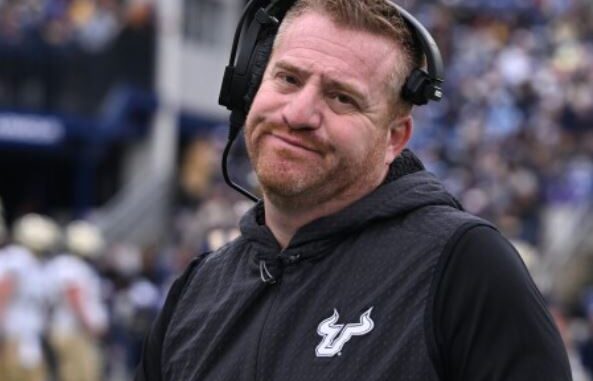
The Auburn Tigers are entering one of the most anticipated moments in the program’s recent history, but first-year head coach Alex Golesh has already been handed a significant challenge before his team takes the field against Baylor on September 5. Auburn’s transition into the Golesh era has generated plenty of excitement throughout the offseason, with the new coaching staff attempting to establish a completely different identity built around tempo, discipline, preparation and an aggressive offensive philosophy. However, the Tigers will enter the new campaign without edge rusher J.J. Faulk, who underwent collarbone surgery and is expected to miss the regular season. Golesh confirmed that Faulk could potentially return toward the end of November or in December, but for now Auburn must prepare to move forward without a player who had worked throughout the offseason to earn a meaningful role.
The injury is an especially difficult blow because Auburn is already attempting to rebuild confidence after a disappointing 2025 campaign, and losing a defensive contributor before the first meaningful game of the new era places even greater importance on the Tigers’ depth. Instead of allowing the setback to dominate the team’s preparation, however, Golesh has challenged his players to remain focused on the larger mission. The coach has repeatedly emphasized that Auburn’s biggest challenge heading into the opener is not simply physical ability but the team’s capacity to maintain focus, execute its assignments and avoid allowing distractions to interfere with preparation. That message has become one of the central themes of Auburn’s preseason, as Golesh attempts to create the mentality necessary for a program that desperately needs a fresh start.

The timing of Faulk’s injury makes the upcoming Baylor matchup even more significant because this is not simply another season opener for Auburn. It is the beginning of the Alex Golesh era, and the Tigers have an enormous opportunity to immediately change the national conversation surrounding the program. Auburn is coming off a difficult season that resulted in a coaching change, and Golesh was brought in with the expectation that he could inject energy, modern offensive ideas and a greater sense of urgency into the program. The new coach has spent the offseason implementing his system while also attempting to understand the strengths and weaknesses of a roster that has undergone considerable change. Auburn’s preparation has included mock game-week practices and scrimmages designed to simulate the pressure of a real contest, giving players an opportunity to experience the type of preparation they will face once the season begins. Golesh has acknowledged that experience is one of the team’s biggest concerns as the Tigers approach Baylor, an understandable issue for a roster trying to learn a new system under a new coaching staff.
The Tigers have nevertheless shown encouraging signs during preseason work. Quarterback Byrum Brown has received praise from Golesh, while wide receivers Chas Nimrod and Keshaun Singleton have also stood out during scrimmage action. Auburn’s coaching staff is clearly searching for players who can become reliable contributors immediately, and that process has produced several intriguing developments. The objective is not simply to survive the opening game but to establish a foundation that can carry Auburn through a difficult SEC schedule. A convincing performance against Baylor would therefore mean considerably more than a win in the standings; it would provide tangible evidence that the program’s reset is beginning to work.
Auburn’s biggest opportunity may come from the offensive system Golesh is bringing to the Plains. His coaching career has been closely associated with aggressive, fast-paced offenses, and his previous work at Tennessee and South Florida demonstrated his ability to create explosive attacks when he has the right personnel. Now the challenge is translating that philosophy to Auburn against an opponent that will have its own expectations entering the new season. The Tigers have reportedly developed considerable depth at running back, with Jeremiah Cobb, Omar Mabson and Bryson Washington among the players competing for opportunities in what could become one of the most important position groups in Golesh’s offense.
The quarterback position will also receive enormous attention because Brown’s ability to operate the new system efficiently could determine how quickly Auburn’s offense develops. Golesh does not necessarily need the Tigers to become an overnight offensive powerhouse, but Auburn must show improvement in areas that have frustrated fans in recent seasons: consistency, execution, explosive plays and the ability to finish drives. The coaching staff has spent camp creating competitive situations and placing players under pressure so that the opening game will not feel completely unfamiliar. That preparation could prove crucial against Baylor. Auburn needs to avoid allowing early mistakes to dictate the contest, particularly because a slow start could immediately intensify questions surrounding the new regime. Conversely, if Brown and the offense can establish rhythm early, the Tigers could quickly create the kind of excitement that has been missing around the program. The offensive philosophy is one of the biggest reasons Auburn supporters have bought into the Golesh era, and the Baylor game will provide the first real opportunity to see whether that philosophy can translate from practice into meaningful competition.
Defensively, however, Auburn must now find a way to compensate for Faulk’s absence. The Tigers were already expected to rely on a mixture of returning players and developing talent as the coaching staff reshapes the defense, and losing an edge rusher before the season begins creates another test for defensive coordinator D.J. Durkin and the rest of the staff. The good news is that Auburn has been able to evaluate several players during preseason scrimmages, and the coaching staff has continued emphasizing versatility and physical development. One player receiving attention is Jared Smith, who has been working to become a more complete defensive lineman rather than simply focusing on his ability to rush the passer.
That development could become particularly valuable if Auburn needs to replace production that would have come from Faulk. The Tigers cannot afford to allow one injury to create a major weakness that opposing offenses can repeatedly attack. Instead, the coaching staff needs several players to collectively absorb the lost snaps and responsibility. That may mean younger defenders receiving opportunities earlier than expected, while established players are asked to take on larger roles. The situation also highlights the importance of Auburn’s depth, something Golesh and his staff have emphasized throughout the offseason. Injuries are unavoidable in college football, and teams that survive difficult SEC schedules generally have enough depth to absorb them. Auburn now has an early opportunity to prove that it has developed that kind of resilience. If the defense can remain disciplined, limit explosive plays and force Baylor to sustain long drives, the Tigers’ offense may have enough opportunities to make the difference.
For Auburn fans, the most encouraging part of the buildup is that the team appears to understand the magnitude of what is coming. Golesh has not tried to hide the challenges facing his roster, but he has repeatedly emphasized preparation, focus and accountability. That approach is especially important because Auburn’s first season under a new coach will inevitably be judged against the program’s recent struggles. The Tigers cannot control what happened last year, and they cannot eliminate every injury or roster concern before kickoff. What they can control is how prepared they are when the opening whistle arrives. The Baylor game is scheduled for September 5 in Atlanta, and it will immediately place the new Auburn regime under a national spotlight.
A strong showing would give Auburn confidence heading into the rest of the schedule and could convince fans that the program has genuinely turned a corner. A poor performance would not necessarily define Golesh’s tenure, but it would create immediate pressure because expectations surrounding a new coaching era are naturally high. The Tigers therefore need to approach the opener with urgency while avoiding the temptation to treat it as a must-win referendum on the entire rebuild. The objective is to show progress, execute the new system and establish the standard that Golesh wants Auburn to follow for the remainder of the season. The coach has already made clear that focus is central to his philosophy, and that message could become particularly important when adversity inevitably arrives during the game.
Ultimately, Auburn’s opening battle against Baylor represents much more than a single game. It is the first public test of whether Golesh’s vision can begin translating into results, and it comes at a time when the Tigers are dealing with their first major injury setback of the new era. Faulk’s absence is undoubtedly disappointing, particularly for a player who had worked to put himself in position to contribute, but Auburn has no choice except to move forward. The coaching staff must now identify the players capable of filling the void, while the offense must demonstrate that it can produce enough points to take pressure away from the defense. Brown, the receiving corps and the running backs will all have opportunities to become early stars in Golesh’s system, while the defense will be challenged to prove that its depth is strong enough to withstand the loss of an important edge player. Meanwhile, the Tigers’ coaching staff will continue emphasizing the same message that has defined the buildup to the opener: focus, preparation and execution. Auburn fans have waited for a reason to believe that another era of competitive football is beginning, and Baylor will provide the first real evidence. The Tigers may not enter the matchup without questions, but that is precisely what makes the opener so compelling. A new coach, a new system, a developing roster and an early injury setback have created a major test before the season has even officially begun. If Auburn responds with the toughness and discipline Golesh has demanded throughout camp, the Tigers could turn the adversity into fuel. The Baylor opener is coming, and Auburn now has an opportunity to send its own warning: the Tigers’ new era is ready to begin.
Leave a Reply