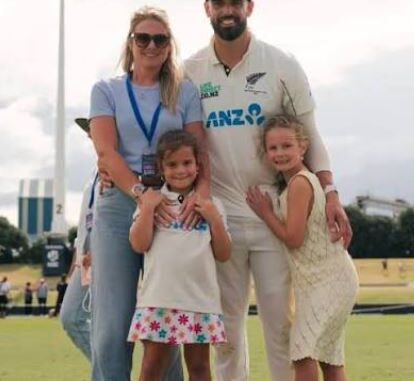
For Mark Mitchell and his family, what was supposed to be an exciting return to college basketball has become a high-stakes battle that could determine the direction of his career. The former Missouri standout committed to Kentucky after receiving temporary legal relief that gave him an opportunity to pursue a fifth season, but the SEC’s subsequent eligibility policy has thrown his plans into uncertainty. With Mitchell’s attorneys continuing to challenge the restrictions, the focus is no longer simply on whether he can wear a Kentucky uniform. It is also about how carefully he and those closest to him navigate a legal and professional situation that could have consequences far beyond the 2026-27 season. While there has been no verified public statement detailing exactly what Mitchell’s family has privately told him, the circumstances strongly suggest that the priority is to remain patient, follow his attorneys’ advice and avoid making any decision that could jeopardize his eligibility or future professional opportunities.
For Mitchell’s family, the most important message is likely to stay calm and let the legal process play out rather than allow frustration to dictate his next move. Mitchell has already experienced the uncertainty that comes with attempting to transition from college basketball into the professional ranks. He went undrafted in the 2026 NBA Draft, participated in the NBA Summer League and then pursued another opportunity in college. That unusual path has placed him in the middle of a rapidly changing eligibility debate. His family therefore has every reason to encourage him to remain focused on what he can control: staying in shape, preparing as though he will play, communicating closely with his legal representatives and Kentucky’s basketball staff, and avoiding unnecessary public disputes that could complicate an already sensitive case. At this stage, patience may be just as important as preparation.
The situation became particularly complicated after the SEC introduced a policy aimed at athletes who had previously pursued professional opportunities before attempting to return to college athletics. Mitchell’s case immediately attracted attention because of his NBA Draft and Summer League history. However, one important distinction has provided some encouragement for Kentucky fans: participation in the NBA Summer League by itself does not automatically make an athlete ineligible under the SEC policy. The key issue is whether the player entered the NBA Draft as an early entrant or signed an NBA contract, including certain professional agreements. Reports surrounding Mitchell indicated that he did not sign an NBA contract during his Summer League experience. That distinction could ultimately work in his favor, but it does not eliminate every issue surrounding his return to the SEC.
The transfer itself has created another layer of uncertainty. Because Mitchell moved from Missouri to Kentucky after the normal spring transfer period, questions have emerged about whether SEC intra-conference transfer restrictions could affect his eligibility. That means Mitchell and his family are dealing with several moving pieces at once. There is the NCAA eligibility question, the SEC’s policy, the timing of his transfer, and the court cases challenging restrictions on athletes seeking additional college eligibility. In such circumstances, the safest course for Mitchell is not to make the situation more complicated. His family can reasonably be expected to emphasize that he should allow his attorneys to fight the legal battle while he concentrates on being ready to play.
That approach is particularly important because Mitchell has already received legal relief allowing him to pursue another season. His attorneys have continued challenging restrictions that could prevent him from competing, and recent court rulings involving other athletes have demonstrated how quickly the situation can change. For Mitchell’s family, that means there is little value in panicking every time a new policy or legal development emerges. Instead, they can encourage him to remain prepared for the possibility that another favorable ruling opens the door for him to play. If that happens, he needs to be physically and mentally ready rather than spending the preseason distracted by the controversy.
There is also a major professional consideration. Mitchell’s decision to return to college basketball is not simply about helping Kentucky win games. It could represent another opportunity to improve his professional prospects. After going undrafted, a strong season with the Wildcats could give him another platform to demonstrate his abilities to NBA scouts and organizations. That makes the eligibility fight even more significant. His family is likely to view the situation through the lens of his long-term career rather than simply whether he can play a handful of college games. Protecting his eligibility, maintaining his reputation and remaining prepared could therefore be more important than reacting emotionally to every development.
Kentucky also has a major stake in the outcome. Mark Pope recruited Mitchell because of what he could bring to a roster with legitimate SEC and national ambitions. Mitchell averaged 18.3 points, 5.2 rebounds and 3.6 assists per game during his previous season at Missouri, giving Kentucky an experienced player capable of scoring, rebounding and creating opportunities for teammates. At 6-foot-9, his versatility could allow Pope to construct several different lineups. Losing him would not destroy Kentucky’s roster, but it would remove one of the team’s most experienced and proven additions. That is why Kentucky supporters are watching the legal battle almost as closely as they watch recruiting and roster news.
The family’s other likely priority is keeping Mitchell focused on Kentucky rather than allowing the controversy to define his entire identity. He has already made the decision to return to college basketball, and Kentucky has become his chosen destination. Until a final decision says otherwise, the most productive thing he can do is prepare like a Kentucky player. That means working with teammates, learning Pope’s system, staying conditioned and continuing to develop his game. If he spends the entire offseason worrying about eligibility, he risks losing valuable preparation time. If the decision ultimately goes in his favor, Kentucky will need him immediately.
There is also an argument for Mitchell to remain cautious about public comments. Because the dispute involves active legal proceedings and conference regulations, even seemingly harmless remarks could potentially become part of the public discussion surrounding the case. His attorneys are in the best position to determine what should be said publicly. That makes disciplined communication another important part of protecting his interests. Rather than becoming involved in a public war with the SEC or NCAA, Mitchell can allow his legal team to make the arguments while he focuses on basketball.
For Kentucky fans, the encouraging part is that the situation is not necessarily headed toward a negative conclusion. Recent legal developments involving eligibility restrictions have shown that conference policies can be challenged successfully in court. Temporary restraining orders and other judicial decisions have already altered the landscape for athletes seeking additional eligibility. Mitchell’s individual circumstances remain important, however, and nothing should be treated as final until his own eligibility situation is definitively resolved.
If Mitchell is ultimately cleared, the payoff could be enormous for Kentucky. Pope would have another experienced SEC scorer to pair with a roster that already features promising young talent and significant size. Mitchell could provide veteran leadership, offensive versatility and another reliable option when games become tight. More importantly, he would enter the season with an enormous personal motivation: proving that his professional ambitions remain alive and that his return to college was worth fighting for.
If he is denied, the consequences would be very different. Kentucky would have to adjust its rotation and redistribute the offensive and defensive responsibilities Mitchell was expected to handle. Other players would receive expanded roles, but the Wildcats would lose a proven SEC performer who was recruited specifically to raise the team’s ceiling. For Mitchell himself, the disappointment would be even greater because the opportunity to continue his college career could disappear after an offseason spent fighting for it.
That is why the best advice for Mitchell right now may be simple: stay patient, stay prepared and let the lawyers handle the legal fight. His family does not need to win the argument on social media or respond to every development publicly. What matters is preserving his options. If the courts ultimately clear the way, he needs to be ready to step onto the court. If the situation takes another unexpected turn, he needs to protect his professional future and avoid decisions that could close additional doors.
For Big Blue Nation, the waiting game is understandably frustrating. Kentucky believed it had found one of the final pieces of its roster, only for eligibility questions to dominate the conversation. But the uncertainty also means Mitchell’s story remains far from finished. His legal team is fighting, Kentucky has a vested interest in seeing him available, and the rapidly changing landscape of college athletics means today’s restriction may not necessarily be tomorrow’s final answer.
For now, Mitchell’s family appears to have every reason to encourage him to keep his head down, trust the legal process, protect his eligibility and prepare for basketball. There is too much at stake for an emotional reaction to determine his next move. His Kentucky opportunity, his remaining college eligibility and potentially his professional basketball future are all connected.
And that is what makes this controversy so important for Kentucky fans. Mitchell was recruited to help the Wildcats chase championships, but before he can do that, he and his family must first navigate one of the most complicated eligibility battles of his career. Until the courts and conference rules provide a definitive answer, the message is likely to remain the same: stay ready, stay patient and do not give up the fight.
Leave a Reply